

By Sophia Marsolek
Sophia Marsolek: Picture yourself in a hospital room. There’s a chair. Maybe a couch. The curtains are drawn, the lights dim. Machines hum steadily. In the bed lies your husband. For four days and three nights, you’ve barely left his side. You haven’t eaten much. Haven’t slept. His body is swollen. A ventilator breathes for him. He’s alive—technically. But you look at him and wonder: Is he still in there? You try playing his favorite shows, hoping something will reach him. Nothing. You ask yourself: Did his life flash before his eyes? Or is it flashing before yours? And then the question you can’t shake — How do you know when it’s time to let go?
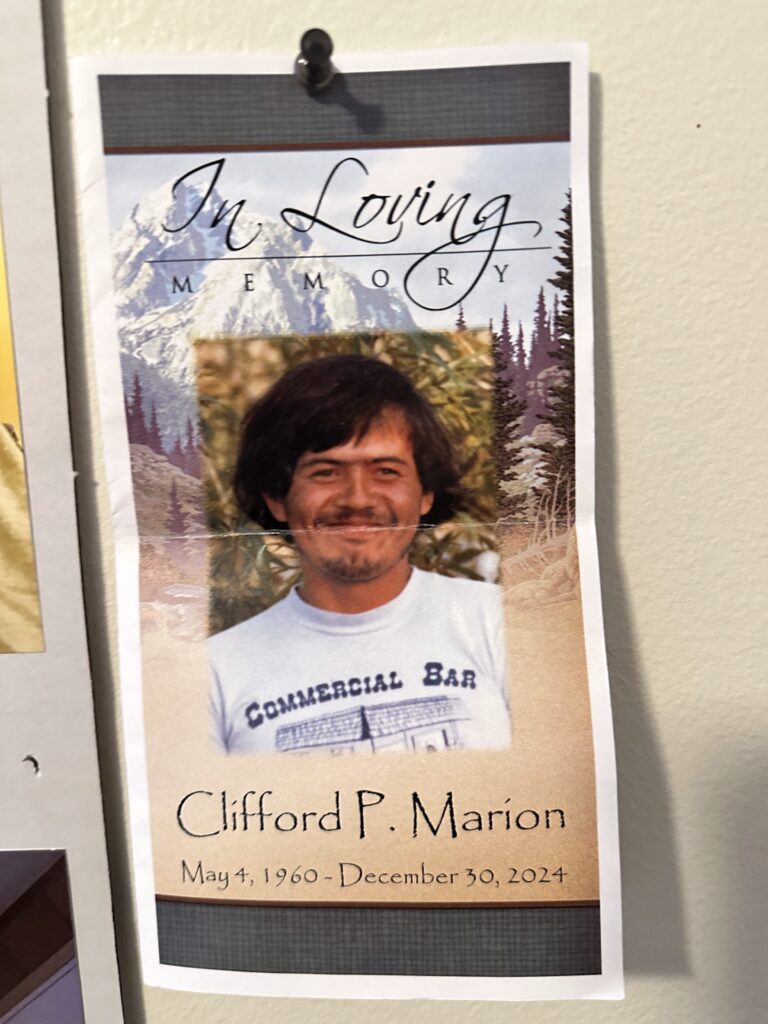
Clifford Marion collapsed at his home in Helena one day right around Christmas in 2024. He’d been sleeping a lot before then. Here’s his wife, Sandy Marion.
Sandy Marion: He said, he’s going to pass out. Well his eyes start rolling in the back of his head and he went all blue and purple in the face.
Sophia: Sandy called for their daughter.
Sandy: I go, Keyanna, call 911, and all of this whole street was lit up with cop cars, ambulances, fire trucks. and then they took them in the ambulance, and the cops gave me a ride up to the hospital. While I sat through it all, watching them what they were doing, and they doing the LUCAS. Do you know what that means? It’s a machine that does CPR for you, it’s bouncing off and on.
Sophia: They put him on a ventilator to keep him breathing. Then they asked if they could give him a feeding tube.
Sandy: And I go, Yeah, let’s start that. And they were saying that if he made it, then we would be okay.
Sophia: But Clifford still wasn’t responding.
Sandy: We went to ICU, room seven, and I, I was up there four days with him, night and day, night and day. And I let everybody come in and see him.
Sophia: At first, getting him out of the house, getting him into intensive care … it was all so chaotic. But in those four days, the people closest to Clifford Marion all had a chance to see him – they had time to think about what was happening to him and what might happen. Then Sandy talked to the Doctor.
Sandy: Dr. Harwood was my favorite doctor out there.
Sophia: The doctor talked to Sandy about Clifford’s breathing tube and what he was looking for if and when he pulls it out.
Sandy: He came in and he goes if he would come out of it, because breathing tube, usually, if you wake up, you would cough up, he would pull the breathing tube out.
Sophia: Sandy had to stand by and watch as they pulled the tube out, hoping her husband would respond in some way.
Sandy: There was nothing.
Sophia: This was a big moment. They all understood that Clifford would continue to need the ventilator to breathe for him. They put him back on the machine. And then they waited.
Sandy: Well, come Monday, and we weren’t making no progress.
Sophia: Doctors scanned his brain. There was no activity. After they got the news, his family tried to get him to respond.
Sandy: If you tickled his feet, he would move them. But we think that’s due to the spine. And so there was nothing.
Sophia: Clifford’s body was there, but he’d never be the same person Sandy knew and married 21 years before, the person they all knew in their own way. It was up to Sandy and their family to decide when to unplug the machines, to let him die. But how do you know when it’s time to let go?
Sandy: Clifford and I met in 1996, we both worked at Helena Industries. And I always thought hey, who’s that handsome guy?
Sophia: When I came across Clifford Marion’s obituary, I thought the same thing. The picture of him on the Helena funeral home website shows a young Clifford – maybe in his 20s or 30s. He’s smiling in this kind of mischievous way – wearing a little mustache and goatee, his hair kind of shaggy. He kind of looks a little like the character Pedro from Napoleon Dynamite in this picture. One of the first lines in his obit is about how he was a short man telling tales to anyone gullible enough to listen.
Sandy: We’d play Rummy, and he likes to cheat, so let’s just say he’ll take the joker and a two, which is wild, and hide them. Monopoly, he would steal your property, so you know he’s cheating. But we just let him be. Let him cheat.
Sophia: He loved to play poker, too, and cribbage, and pool. I visited Sandy in Helena and she showed me pictures upon pictures that now decorate her bedroom. I noticed a picture hanging above the bed. Clifford is young and skinny. It looks like it was taken around the same time as the picture from his obituary. He’s hunched over a pool table, lining up the perfect shot.
Sophia on tape: And that picture over on the wall, is that kinda what he looked like when you met?
Sandy: Yeah, that is what he looked like when we met. He could hold the pool table from like two in the afternoon till two in the morning.
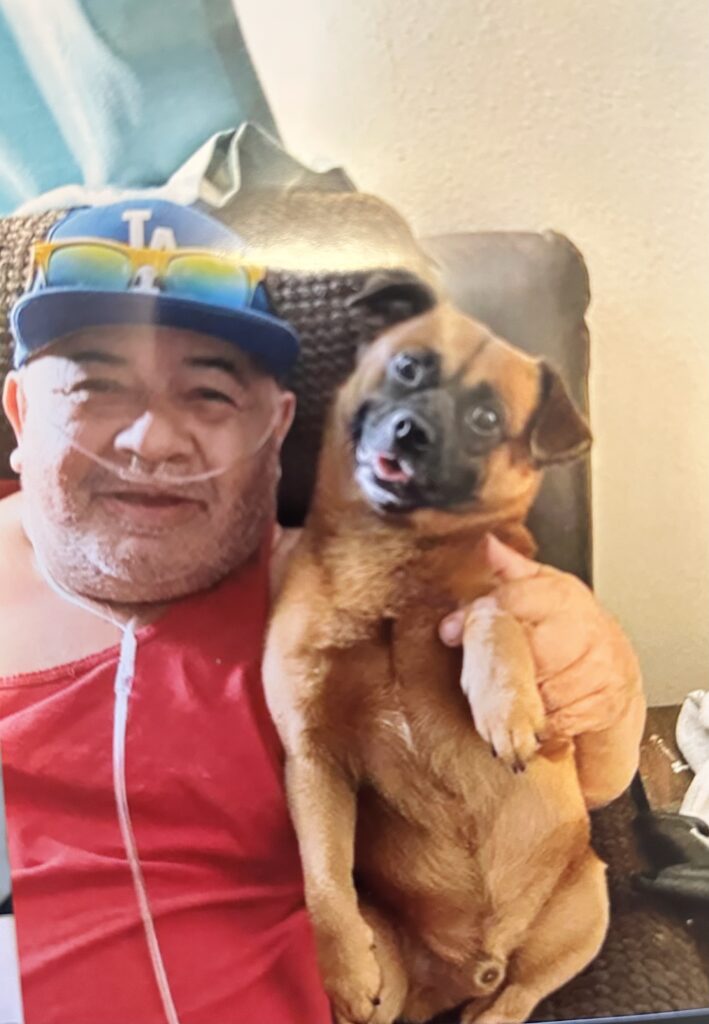
Sophia: There are pictures of Clifford’s face, sticking his tongue out and making silly faces. Even with an oxygen tube tucked under his nose.
Sandy: We would take any kind of pictures if he made a face. So this is some of his faces he makes. You could tell some, he looked mad in this one with the Dodgers hat. But I think he’s mad because he’s tired of being on oxygen, which he was. And I could see he’s been tired of being on oxygen.
Sophia on tape: Yeah, that must’ve been hard.
Sandy: It is for him.
Sophia: Long before an oxygen tank and declining health became such a big part of Clifford’s – and Sandy’s – life, there was the Crow Creek Valley in Montana. He was born in North Dakota, but this beautiful valley surrounded by the Elkhorn Mountains is where Clifford grew up. He was the fourth of five kids and they were enrolled in the Turtle Mountain Band of Chippewa Indians. As a kid, he worked at the Cazier’s Ranch with his dad and brother after school.
Sandy: It was a small ranch. There was basically no stores on the ranch, so you had to go all the way into Townsend to get food, but … and there was a root cellar and that was a two bedroom house, but it’s no longer there because they tore it down.
Sophia: Richard, Clifford’s brother, remembers those days.
Richard Marion: He was always the talker. He’d go up to strangers when we were kids and just start talking to them.
Sophia: Clifford and Sandy married in 2003 in Helena with a justice of the peace.
Sandy: We didn’t have a wedding because we couldn’t afford it, but we had cheesecake.
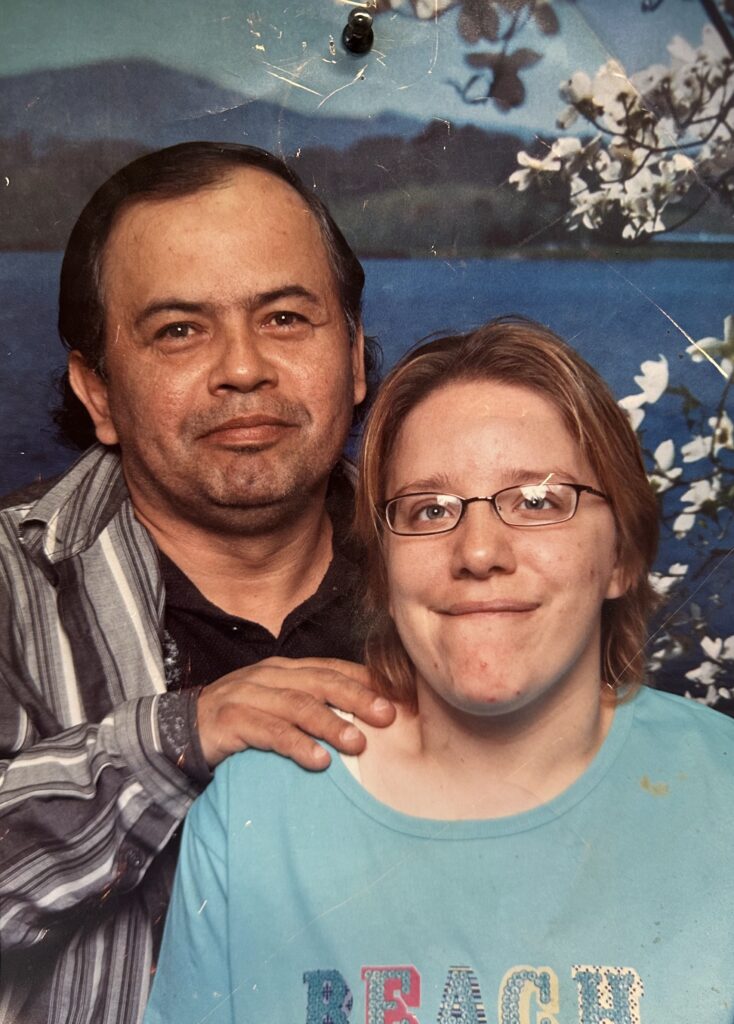
Sophia: This was Clifford’s second marriage. He and Sandy had five kids. With his first wife, he had four kids. Much of their lives was spent working and raising kids. Before the family stood in Clifford’s hospital room, there wasn’t a whole lot of time to think about things like leaving a legacy. But if Clifford did leave one, it might have been at the Town Pump. He worked at the one in Boulder for almost 10 years. And his brother says he was in his element there.
Richard: He loved doing it. He loved talking to the customers. He said they had him sitting by the door just greeting people because of his hips. He just sat on a stool.
Sophia: So… Town Pump. If you’ve spent any time in Montana, you know the deal– almost every town’s got one. It’s part gas station, part convenience store, part casino, all mashed together under one neon sign. The lights stay on late, drawing truckers, locals, and road-weary travelers looking for gas, coffee, or something fried.
Sophia: One of his daughters, Brooklin, works there now and started when she was 16.
Brooklin Marion: People say that when I work up there, I’m like, following his footsteps, and that I’m like, just like him, and like he would train everybody on the till, and I do that now to everybody, and I’m like, I learned from the best. It’s in my blood. And he just really liked that job.
Sophia: Brooklin, along with his eight other kids were there at the hospital with him as the family decided what to do at the end. So were their spouses, Clifford’s niece, nephew and cousin. Brooklin thought about what death would be like for her father. She tried to put herself in his place.
Brooklin: We know dad wouldn’t want this, that he wants to go be with his older sisters that are up there, his dad, all his friends that have passed. And knowing that he would watch over us and be there for us made it easier, but it was hard at the same time.
Sandy: And so we finally made a decision.
Sophia: How do you know when it’s time? For Sandy, it was when the pain of seeing him this way hurt worse than watching him die. It was December 30, 2024. Clifford was 64 years old.
Sandy: 5:15 came around, and everybody was in there, and I finally said I go, I think it’s time to pull it. So that happened to me pulling it. I couldn’t seem like that anymore, being like a vegetable, so I pulled the plug on him.
Sophia: When Sandy replayed his life in her mind, she knew that man in the bed wasn’t there. She didn’t want the memory of Clifford’s lifeless body to outweigh the others.

Keyanna Marion: I remember this one story, so nobody thought that he could do a somersault. My brother Patrick bet him $100 to do it. So he went on our trampoline, and he did a somersault, and he got $100 and everyone was so mad because, like, they made a bet, and my brother was young, and he didn’t even know what he was doing with his money.
Sophia: That’s his daughter, Keyanna, and Clifford’s beloved dog, Smokey, in the background.
Kyanna sent me the video of this somersault stunt. In it, Clifford steps up to the trampoline, surrounded by family who cheer him on. It’s sunny and hot, he wears nothing but a pair of blue shorts and his oxygen tube.
Keyanna: My dad was so proud, and everyone was so proud of him because he was on oxygen and like we thought, he couldn’t do it, but he did it, and it was, it was a good day for him cuz he got a hundred dollars out of it.