

By Kathleen Shannon
[soundscape: cars passing on the highway, cow moos]
Kathleen Shannon: Drive west on the interstate from Missoula, Montana, along the winding Clark Fork River and after about 50 miles, the trees on your right will open up. You’ll see a valley dotted with a few homes and a lot of cattle fence. Blink and you’ll miss Tarkio. It’s not quite a town – technically it’s an unincorporated community. And it’s where Wayne Leslie Boyes spent his whole life. Some people argue Wayne was its symbolic mayor.
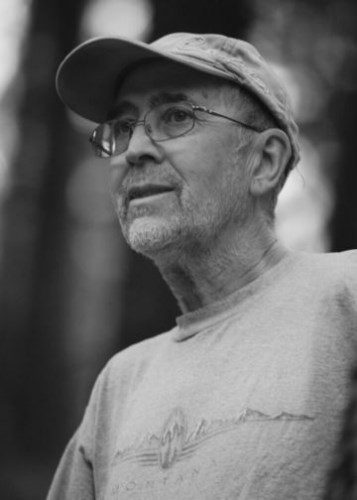
Deb Boyes: When Wayne’s granddad passed away, my dad had told Wayne, ‘Well, now you’re the mayor of Tarkio.’ So it’s an inherited position.
Kathleen: But Wayne wasn’t one for the spotlight.
Justin Boyes: That’s half the joke is that he would not be the mayor of Tarkio. [laughs] He was not gonna — nuh-uh.
Kathleen: Mayor or not, Wayne dedicated his life to Tarkio. It’s hard to know now how much of that came from duty to his family — who made up a large share of the Tarkio population — or how much came from love of the land, or something else. But what I do know is that I’ve never heard of someone who seemed so content to be exactly where he was and to basically never leave. Wayne took over the family ranch at just 15 years old, after his grandfather suffered a stroke. He married Deb — that was her you heard along with their son, Justin. Deb also grew up in Tarkio, less than two miles across the valley floor. Their wedding was on the bank of a nearby creek, where they later raised Justin and his sister, ShayAnne. On top of a full-time job with the state, Wayne mowed the weeds, built the fence and ranched all the acres in between.
He moved cattle two days before he died, in July 2022, after a long battle with cancer. He was 65 years old.
Wayne was a man of few words — but they were powerful ones. He used them to teach life lessons to not only his kids, but also a whole cast of young people who came to work here, including Sokol Celmeta, a foreign exchange student from Albania who found his way to the ranch in 1999. He remembers a day when he and Justin, both teenagers, rushed to finish building a section of fence. They had plans for a double date with a couple of Missoula girls that night. Well, the next day, Wayne had some words about that.
Sokol Celmeta: He took me in the truck. He said, ‘Let’s go in the truck. We got some fencing to do.’ And he pulled over right by the shitty section we did. And he said, ‘I got a bone to pick with you.’ And I was scared ‘cause I had never seen him raise the voice. And he, he raised the voice and by raising the voice I mean one decibel higher than normally speaking. He never yelled or screamed. And I was like, ‘Oh no, I’m in trouble.’ And he said, ‘If you’re gonna do something, you make sure you do it right.’ [pause] And I think about that all the time.
Kathleen: Wayne was the kind of guy you didn’t want to disappoint. In fact, he made you want to be a better person. And in his quiet way, he would invite people to take ownership on the ranch, to find a place in his world. Deb for sure found hers. One year she offered to run the swather, a tractor attachment used to cut hay.
Deb: And as we were driving out to the field, he throws the repair manual at me. And I said, ‘Hun, I told you I would operate it. I didn’t say I was going to repair it.’ And he said, ‘Well, if you think I have time to come run and every time you have a breakdown, you are wrong.’ And so he was, he very much, you know, sometimes that was a little frustrating, but on the other hand, I always felt like: ‘Huh, he believes in me. He knows I can do this, I can get it figured out.’
Kathleen: When they were first married, Wayne would hoard farming magazines in the cupboards, claiming he’d read them when he retired. He was big on gathering information. He took forever to get through museums because he’d read every word on every plaque. And he liked finding maps and photos of old one-room schoolhouses in the state with his grandson. He’d pour over catalogs of cattle genetics and study grass species. In fact, Wayne took up sustainable ranching practices – like 100% grass-fed cattle – way before that was a label you could find on a package of beef. As for his to-do list – it was never-ending. Every time Wayne checked off a project, a new one would take its place. Deb still remembers how that would go down.
Deb: He would say, ‘Hey Justin, I need you to go get a load of firewood with me. It’ll only take an hour, hour and a half. Just go get a small load.’ So Justin would say, ‘Okay.’ And then Wayne would say, ‘Well, first we gotta clean out the truck so that we have, so we can put firewood in it.’ You know, so that’d take them 15, 20 minutes. And then Wayne would say, ‘Well, since the truck’s empty, let’s go get the stock tank and move it.’ And then it’d be like, ‘Well, we may as well take some hay out to the cows.’ And so it would be a six-hour ordeal for doing his hour, hour and a half chore of going to get wood.
Justin: Yeah. Now it’s dark, so we’ll have to get wood tomorrow. At least the truck’s empty.
Kathleen: Deb had her own tricks, too, like when she wanted to get Wayne off the ranch and go on a family vacation. If he couldn’t commit, she’d tell him she was buying plane tickets for herself and the kids the next morning.
Deb: And he said, ‘What do you mean you’re gonna go without me?’And I said, ‘Yeah, the kids and I are going. We’d love to have you come.’ And so he said, ‘Okay, I’ll go, I’ll go.’ And he, you know, he loved it. He never regretted it for a minute, but it was just giving himself permission to, I think.
Kathleen: According to Wayne’s obituary in the newspaper, which Deb wrote, the couple marked milestones like wedding anniversaries by – doing ranch chores. She wrote that what mattered was how they celebrated 365 days of the year, not one. That caught my eye. It read like an entire philosophy of life, in just one sentence. And it felt familiar. I spent my twenties working on farms, finding a sense of beauty in repetitive work, and a rhythm to working with the seasons. The choice to spend your life preserving some acres on this warming earth seemed like a higher calling. But I didn’t grow up on working lands. So I moved around – a lot, searching for some I could stay on. I never quite landed it, and eventually switched careers – a move I still have complicated feelings about.
So who was this man who never stopped working the patch of ground he was born on? I wanted to find out. The obituary included the date for Wayne’s memorial – just a few days after I read it. It said ‘Please join us for Wayne’s homegrown E5 angus beef.’
So I did.
Deb: Welcome everyone and my family would like to thank you all for honoring Wayne today.
Kathleen: On a chilly October Saturday, the Boyeses threw a big memorial, serving fresh-grilled burgers from Wayne’s very own cattle. And there were a lot of mouths to feed. The half-mile long driveway to the ranch-house had cars parked on both sides. A microphone and speaker stood at one end of the crowd. Here’s Justin.
Justin: Um, like mom said, Dad found out he had cancer about 15 years ago. We were in Bozeman at the time and I remember rushing home from college. We all had dinner. And, Shay, you put on a classic soul station on the internet radio. And instead of admitting to each other that we were devastated and scared, we danced in the kitchen. And, we all tired out except for mom and dad. We sat down and Mom, you and dad were slow dancing to ‘Lean on Me’ or maybe ‘Stand By Me.’ We can’t remember. Sorry to Bill Withers and Otis Redding. But it hit us then and we all cried together. And then we had 15 more years and were so grateful for those 15 years.
Kathleen: The cancer – it didn’t stop Wayne from ranching those 15 years. During calving season, Deb says Wayne would finish his workday at the Department of Transportation – and he’d come home to feed cows and check on the ones who might give birth. Then he’d drive himself 40 miles to Missoula for radiation and back. Then he’d check on the cows again.
It wasn’t until the last couple years of his life that Wayne relaxed a bit more. He and Deb traveled around in a camper, visited friends and family. And back at home on the ranch, against all his instincts, he even let some of the weeds go.
Kathleen on tape: How was it for you to kind of watch him be able to embrace that?
Deb: It was a joy ‘cause we had that time together, but it was kind of bittersweet because it did take that many years for him to allow himself to do that. And then, you know, each thing we would do, there was like so much joy in it, but it was hard to not ask myself: “Is this the last time we’re gonna do this? Is this the last time we’re gonna be here together?” You know, and being grateful that we were there. So there’s a whole lot of those in the last two years.

Kathleen: Finally, in early summer, the doctors told Wayne it was time to make a decision: between the quantity of his remaining time and the quality of it. He’d never been good at making decisions and his family was supportive when he let his treatment slow to an end. Wayne was down to his last few weeks, and so he spent them visiting with old friends, hanging out with his grandkids, and yes, still moving cows.
Deb: It felt like those six weeks were maybe the first time in his life that he lived without pressure, of, you know, expectations that he put on himself or expectations that he maybe felt others put on him. He just very much lived in the moment.
Kathleen: Then came the moment when Deb could tell Wayne was about to die. She queued up a song and pressed play.
Heather: And it was the moment that we all knew that he was finally letting go and ready to go.
Kathleen: Heather was Justin’s high school sweetheart before they got married. She was pretty much another daughter to Wayne, and she learned to play that song on her ukulele for the memorial.
Heather: And so I’m gonna try to get through it. I think I can.
[Heather plays song on ukulele.]
Heather: I’m so sorry’s. I’m like losing it really bad.
Deb: It’s okay, Heather.
Heather Celmeta: I can play it. [nervously laughs]
[Heather continues song.]
Kathleen: Wayne’s ashes will be buried in a cemetery on the property, eventually. For now, his urn waits in Deb’s bedroom, so that after she dies, they can be buried together. Deb actually broke ground on the family cemetery when her dad passed. It’s between the house where Wayne grew up and the one where he died. She picked it because she likes the big pine tree there. Wayne okayed the spot too for practical reasons. It was an easy place to dig and a hard spot to farm.
[Heather: Finishes song]
Kathleen: It seems like an honor to inherit a ranch, but a complicated one — part gift, part obligation, parts adventure and duty. And Wayne wrestled with what it meant to leave one behind.
Justin: He wouldn’t have admitted it, but I knew that he’s coming up against his own mortality and he’s thinking about his legacy and what he’s left. I think that list of everything that he wanted to get done that he didn’t get done had him feeling like maybe he hadn’t done enough. But everybody who drives by on I-90 will look out here and see the mark that he left, the work he did, he spent his entire life doing for — until I-90’s not there. I mean, it’s farming the land year after year the way he did, what’s left is on a geological scale.
Kathleen: I visited the farm again six weeks after Wayne’s memorial. It was the first time his family was selling cattle to market without him.
Kathleen on tape: What’s your kitty’s name?
Kid: Pork Chop.
Kathleen in tape: Pork Chop?!
Kathleen: Deb was sitting at a worn kitchen table with her grandkids, Graham and Phoebe. They ate reheated waffles while their parents drank coffee, waiting for the cattle truck to arrive. The house was full of boxes. The kids shared a bunk bed in the living room. Justin and Heather had moved their family to Tarkio from Seattle when Wayne was dying. It was supposed to be temporary. But they didn’t know yet that Wayne would be the first in a wave of family deaths – four people in 13 months, including Justin’s sister, ShayAnne. They couldn’t know that they’d take custody of her two sons, and renovate the house we were standing in to make room for their now-bigger family. They didn’t know yet that within a couple years, they’d be in Tarkio full-time, picking up the ranch with Deb where Wayne had left off – that that’s exactly where they’d want to be.
But on this morning, the morning of the cattle sale, Deb reaches across the table for a blue crayon and starts scribbling notes on a sheet of paper.
Deb: Yeah. I’m thinking he went H, J. J. Yes.
Kathleen in tape: Is that the ear tags?
Deb: Yeah.
Kathleen: They were downsizing the herd.
Deb: I’m just wanting to give the buyers an idea of how old the cows are ‘cause I lost Wayne’s cattle book, so we’ve got to figure it out.
Graham: I thought they were in the cabinet behind the table.
Deb: Yeah. That’s the old ones.
Graham: Oh, right, right, right.
Kathleen: We all stood outside near the cattle pen, stamping our feet in the snow. The truck was running late. I asked the Boyeses if they’d made a plan with Wayne before he died, about what to do with the cattle.
Deb: Our plan had been to sell ’em at the end of September, and um, so I think once he knew he probably wasn’t gonna be here at the end of September, that’s still what he envisioned us doing. But we didn’t get that done. There’s just…
Kathleen: Wayne had been gone four months. Standing in the grass he’d grown and among the cows he’d raised, Wayne’s absence felt big. But what he would have wanted – his presence, in a way – that felt big, too.
Deb: He’ll be pleased! That they’re not all going.
[cow moos, cars on highway, fade out]